The Ultimate Guide to Choosing the Right Productivity App in 2026: A Systematic Comparison Framework
How to compare productivity apps. In a world where digital distractions multiply relentlessly and the average knowledge worker juggles over a dozen tools daily, selecting the right productivity app has become a high-stakes decision. By 2026, the market has matured far beyond simple to-do lists; modern apps now integrate AI assistants, deep workflow automation, cross-platform synchronization, and even biometric mood tracking. Yet with this abundance comes paralysis. Without a structured comparison framework, you risk wasting time on shiny features that don’t align with your actual needs. This guide provides a systematic method to evaluate productivity apps, ensuring your choice genuinely boosts output rather than adding cognitive overhead.
Define Your Core Productivity Needs
Before opening any app store, you must articulate what “productivity” means for you. Productivity apps are not one-size-fits-all—a project manager’s requirements differ vastly from a freelance writer’s. Start by auditing your current workflow for pain points. Do you struggle with task prioritization, time tracking, or cross-team collaboration? Are you an individual user or part of a large organization? In 2026, apps have specialized into distinct categories: simple task managers (Todoist, Microsoft To Do), all-in-one project platforms (Asana, ClickUp), note-based systems (Notion, Obsidian), and AI-powered personal assistants (Motion, Akiflow).
Create a list of non-negotiable features. For example, if you frequently switch between Windows, macOS, Android, and iOS, native cross-platform support is essential. If you deal with repetitive tasks, look for native automation triggers (like Zapier integration or built-in AI macros). Avoid the trap of feature overload: an app that does everything poorly is worse than one that does a few things brilliantly. Write down your top three priorities—such as offline access, calendar integration, or natural language input—and use them as your baseline filter.
Evaluate User Interface and Experience
A productivity app’s interface directly determines how often you’ll actually use it. Even the most powerful tool is useless if it requires 15 minutes to log a simple task. In 2026, the trend leans toward minimalism with contextual intelligence—apps that anticipate your next action. When comparing, download the trial version and use it for at least three days on your primary device. Pay attention to load times, gesture fluidity, and the learning curve.
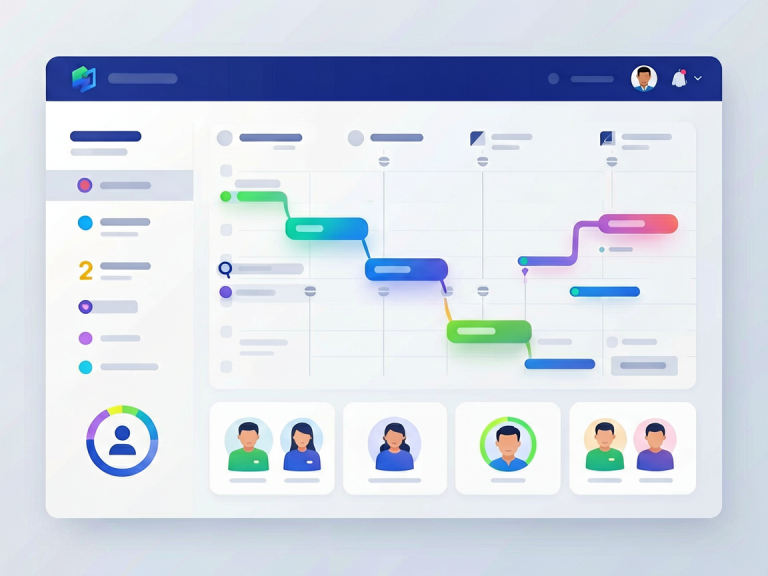
Key interface questions to ask: Can you create a task in under five seconds? Is the default view (list, board, calendar, timeline) intuitive for your brain? Does the app offer customizable themes and layouts to reduce visual clutter? Also, test the mobile experience thoroughly—many apps have desktop parity but poor mobile responsiveness. A good sign is when an app’s mobile version lets you perform 90% of desktop actions without frustration. Conversely, beware of apps that hide essential functions behind deep menus; cognitive friction kills productivity.
Analyze Feature Sets and Customization
Once the interface passes your gut check, dive into feature depth. Compare apps across a standardized rubric: task management (due dates, recurring tasks, subtasks, dependencies), organization (tags, folders, priority levels, custom fields), and flexibility (templates, filters, saved views). In 2026, many apps now offer “AI co-pilots” that can auto-generate task breakdowns, suggest prioritization based on deadlines, or even reschedule tasks when emergencies arise. Evaluate whether these AI features are genuinely helpful or just gimmicks.
Customization is the hidden key to long-term adoption. A rigid app forces you to adapt your workflow to its logic, which often backfires. Look for apps that let you rename labels, create custom statuses (e.g., “Waiting on Feedback”), and build dashboards tailored to your role. For team use, check granular permission settings—can you restrict certain views to specific members? Also assess automation capabilities: does the app include native rules (e.g., “when a task is marked complete, send a Slack notification”) or rely solely on third-party integrations? The less you depend on external connectors, the fewer points of failure.
Consider Integration and Ecosystem Compatibility
No productivity app operates in isolation. Your email, calendar, cloud storage, communication tools (Slack, Teams, Discord), and note-taking apps must talk to each other. The modern “productivity stack” in 2026 often includes a central hub that aggregates data from multiple sources. When comparing apps, map out your existing toolset and test the integration quality. Native integrations (e.g., direct Google Calendar sync) are far more reliable than webhook-based ones. Check for bidirectional sync: if you update a task in the app, does the linked calendar event reflect the change instantly?
Also consider the app’s API and open ecosystem. Some apps, like Notion, allow extensive third-party plugins, while others like Apple Reminders are walled gardens. For power users, the ability to build custom integrations via tools like Make (formerly Integromat) or write scripts in Python/JavaScript is invaluable. Be wary of apps that require you to switch platforms entirely—migrating your entire team’s workflows is a massive undertaking. The best app sits comfortably at the center of your existing digital life, not as an alien addition.
Assess Performance, Reliability, and Security
Performance may seem obvious, but it’s frequently overlooked in the excitement of flashy features. In 2026, with cloud-based apps dominant, speed depends on server infrastructure, CDN caching, and local data handling. Test the app under real-world conditions: large projects with hundreds of tasks, heavy file attachments, and multiple collaborators. Does the app lag when scrolling through a long list? Does it crash when you try to attach a 50 MB PDF? Reliability is equally critical—downtime can derail an entire team’s day. Check the app’s status page for historical uptime; 99.9% should be the minimum.
Security and privacy concern every user, especially in a post-2020 era of data breaches. If you handle sensitive business information, verify encryption standards (AES-256 at rest, TLS 1.3 in transit), compliance certifications (SOC 2, GDPR, HIPAA where applicable), and data residency options. Does the app offer two-factor authentication? Can you export your data in an open format (e.g., CSV or Markdown) to avoid vendor lock-in? For freelancers, privacy might be less stringent, but still avoid apps that sell user data for advertising. Read the privacy policy’s “data processing” section carefully.
Compare Pricing Models and Scalability
Pricing structures vary wildly. Some apps offer free tiers with generous limits (e.g., Todoist’s free plan covers 5 projects), while others like ClickUp throttle features unless you pay $10+/month per user. In 2026, many apps have shifted to usage-based models, charging per API call, per automated action, or per storage gigabyte. Calculate your expected monthly usage before committing. For individual users, a flat subscription under $10/month is typical; for teams, look for per-seat pricing that offers volume discounts.
Scalability matters even if you’re a solo user today. You might later expand to a small business or need to add contractors. Does the app allow seamless upgrades without data loss? Are there enterprise features (e.g., SSO, admin controls) that you can unlock later? Conversely, avoid apps with aggressive “land and expand” strategies that lure you in with a cheap plan then force expensive upgrades as your needs grow slightly. Read the fine print: some apps charge extra for “premium integrations” or “priority support.”
Leverage User Reviews and Trial Periods
Finally, validate your shortlist with real-world evidence. In 2026, review platforms like G2, Capterra, and Reddit communities offer unfiltered feedback. Pay attention to recent reviews (within the last six months) to catch any regression in quality after a major update. Look for recurring complaints: sync bugs, poor customer support, or abandoned features. Also note praise that aligns with your priorities—if multiple users rave about an app’s speed, that’s a strong signal.
Take full advantage of free trials (most apps offer 14–30 days). During the trial, simulate your typical week: create actual projects with realistic deadlines, invite a collaborator, and integrate your real calendar. Set a reminder to evaluate the app again on day 21; the initial excitement often fades, revealing usability friction. Do not rely solely on YouTube demos prepared by the company—they always show the best-case scenario. Your own hands-on test is the ultimate judge.
Conclusion: Build Your Personalized Decision Matrix
Comparing productivity apps is not about finding the “best” app universally; it’s about finding the best fit for your specific context. After completing the above analysis, create a weighted decision matrix. List your six to eight key criteria (e.g., UI speed = weight 20%, integration depth = weight 15%, price = weight 10%), score each app on a 1–5 scale, and tally the totals. This removes emotional bias and turns a subjective choice into an objective one.
Remember that no app is perfect. The best strategy is to commit to at least three months of dedicated use, resist the urge to switch prematurely, and only then reassess. By 2026, the most productive people are those who master one tool deeply rather than sampling many. Use this framework to cut through the noise, and you’ll find the app that transforms chaos into clarity.